Shakespeare's Sisters: Four Women Who Wrote the Renaissance
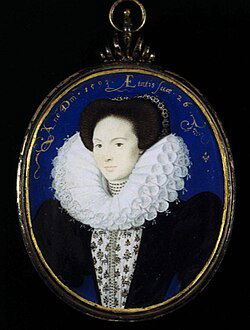
American Professor Ramie Targoff appears to be living in a time-warp. She has written a book about four women writers who were roughly contemporary with Shakespeare, and talked about them at the Oxford Literary Festival as if they were new discoveries: Elizabeth Cary, Mary Sidney, Emilia Lanyer and Anne Clifford.
In fact all of them have been studied now for at least forty years, and while it is important to widen awareness of advances in women's studies among the general reading public, it is no use claiming that any of this is ground-breaking research.
As for Mary Sidney, Countess of Pembroke, Margaret P. Hanney's biography, Philip's Phoenix: Mary Sidney Countess of Pembroke, was published in 1990. The Collected Works of Mary Sidney Herbert, Countess of Pembroke, edited by Margaret P. Hannay, Noel J. Kinnamon and Michael G. Brennan., followed in 2 volumes in 1998. Her poems, including love elegies such as The Doleful Lay of Clorinda, Psalms and other translations are conveniently available on websites.[https://allpoetry.com/Mary-Sidney-Herbert].
I remember a research paper about Lady Anne Clifford and her legal case being given in the early 1980s at Merton College in the Literature/History seminars held by the late John Carey. Then it was cutting edge, but not now. In 2001 a full biography of her appeared, Proud Northern Lady, by Martin Holmes. Her diary is of great historical interest and was published about a century ago by Vita Sackville-West. Another edition appeared in 2003 published by The History Press.
Targoff said that we only have Lanyer's word to Simon Forman that she was connected with Hunsdon, but it is now widely accepted that she had a son by him. The date of this child's birth is 1593, which fits with the date of Emilia's marriage in late 1592 to her cousin, Alfonso Lanyer, arranged to provide the child with a legal father. The child was called Henry - the Christian name of Lord Hunsdon. And everything Emilia told Forman corresponds to surviving records of birth, marriage and death. There is no reason to doubt it.
[McBride, Kari Boyd (2008) http://nzr.mvnu.edu/faculty/trearick/english/rearick/readings/authors/specific/lanyer.htm Web Page Dedicated to Aemilia Lanyer] Archived 25 September 2015 at the Wayback Machine, accessed on May 2015.]
Moreover, the date of publication of Lanyer's poems in 1611 and the drift of its preface are consistent with it being a riposte to a recent book in which a woman was defamed. Shakespeare's Sonnets were printed in 1609.
And subsequent research has tended to strengthen Rowse's theory. The actor Tony Haygarth investigated a late Elizabethan miniature portrait of a dark-haired, dark-eyed Elizabethan lady by Nicholas Hilliard in the V and A (see picture), and found many intriguing details to suggest that it depicts Emilia Lanyer. It is dated 1593 and says the sitter was in her 26th year. This fits exactly with the birth date of Emilia Lanyer in 1568. The name written on the back (in the 19th century) connects it with her sister, Mrs Holland, who was dead by 1584. Her costume is embroidered with silkworms and mulberry trees - the heraldic motifs of the Bassano family - and the stag of the Earl of Essex, for whom Lanyer once worked. He too, has Shakespearean connections. Haygarth's discovery is one of many significant ones made by non-academics in modern times that should make the academics green with envy.
[The discovery was first printed in BBC History magazine, then reported in Unmasked - the Identity of Shakespeare's Dark Lady, The Independent https://share.google/xMVDOuYZ909iTgVep]
Of course we do not have to believe that Emilia Lanyer was necessarily Shakespeare's Dark Lady to appreciate her poetry, which I taught at the University of Roehampton twenty years ago. The Description of Cooke-ham is a delightful poem, and is indeed one of the first country house poems in English, if not the very first. It is now conveniently available with other poems by Lanyer on websites.
[https://www.poetryfoundation.org/poems/50661/the-description-of-cooke-ham]
There have been several other editions of Lanyer's poetry since A.L. Rowse, including one edited in 1993 by Susanne Woods (who accepts the Hunsdon connection), and an anthology, Renaissance Women Poets: Aemilia Lanyer, Isabella Whitney and Mary Sidney, in the Penguin Classics in 2001.
None of this indicates being overlooked or neglected by academia.
I would suggest that, before rushing to buy her book, Prof. Targoff's students at Brandeis concentrate on accessing the existing scholarship on this topic, because there is far more of it than anyone who attended her talk today might suspect, and much of it is easily accessible.