Celestial Art: 80th birthday celebration for Edward Higginbottom
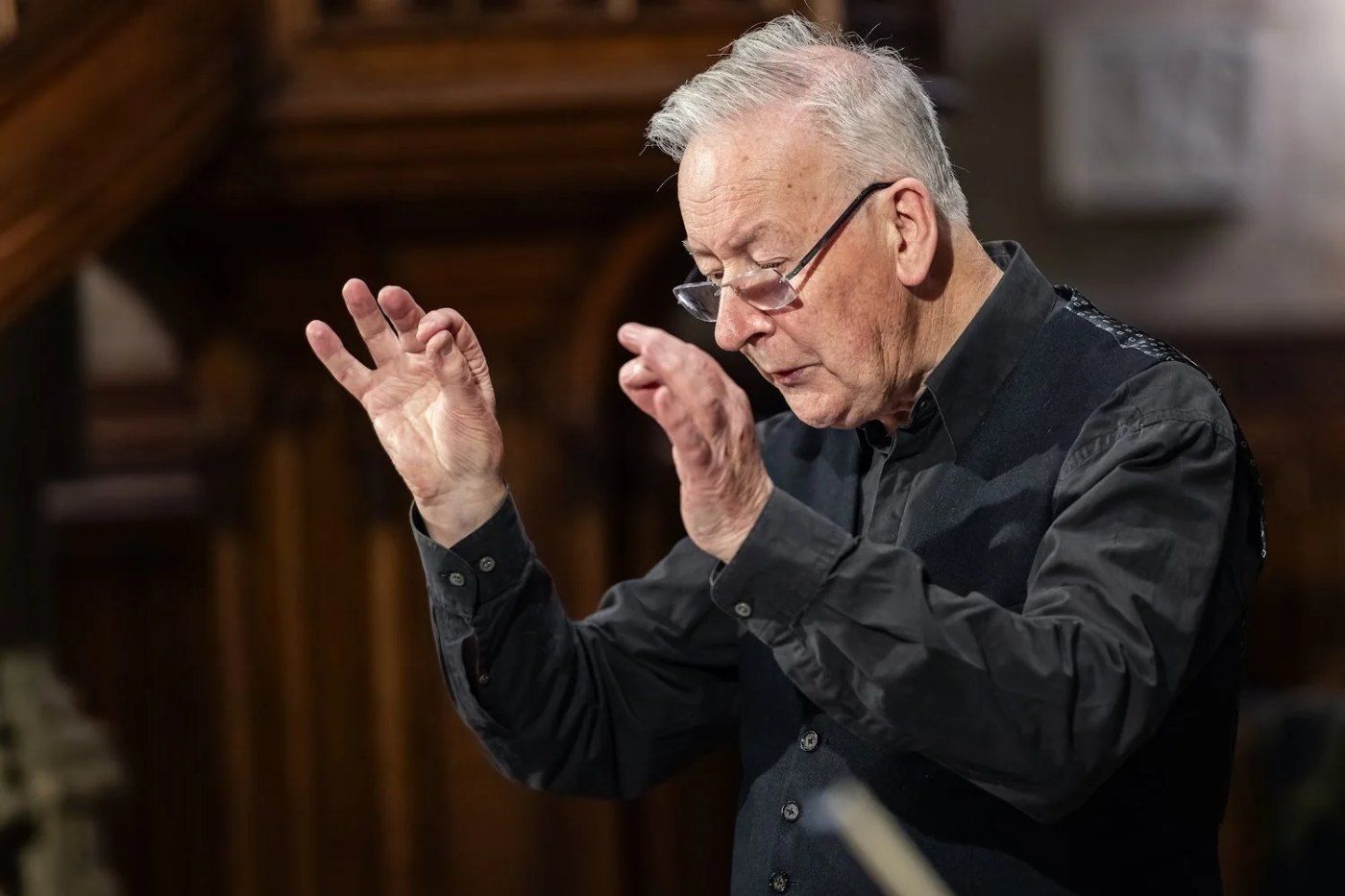
It was also in honour of St Cecilia's Day (22nd November), featuring in the first half a performance of Purcell's glorious Hail, Bright Cecilia! An ode to the patron saint of music, it is truly a celebration of music itself. In the resonant acoustics of the University Church of St Mary, beneath the glorious sight of the gilded organ pipes, the baroque timpani and valveless trumpets sounded splendid and triumphant.
It is a setting of a poem by Nicholas Brady that calls music "Nature's voice", and invokes a "Soul of the World", an idea of ancient pre-classical philosophers, a spirit that is both a creative force and a bringer of harmony. If that sounds pretty close to an actual deity, well, it is. The "noble organ" - Edward Higginbottom's instrument and the one St Cecilia is always shown playing - is singled out for the highest accolade: "From Heaven its wondrous notes were given."
The tenor soloist in "Tis Nature's voice", Edward Beswick, was a particular pleasure to hear. The soprano soloist in "Thou tunest this world" had a radiant tone, and I particularly enjoyed the busy, rhythmic bass solo, "Wondrous machine!" The duos of basses and tenors sounded to advantage against the soft tone of baroque violins, which are less penetrating then modern ones.
Lalande's Dies Irae (Day of Judgement) was a far gloomier piece, but full of drama. It is an example of French sacred music from the same period as Purcell, the field in which Professor Higginbottom specializes. I would single out here the récit (number 10) Oro supplex et acclinis as being particularly beautifully performed.
In the near future, Instruments of Time and Truth are going to perform Bach's Mass in B Minor with the Oxford Bach Choir (Sat 5th December 7.30pm, Sheldonian Theatre) and The Messiah (Saturday 12 December 2026 4pm, Schwarzman Centre for the Humanities) .
For details, booking and notices of more future concerts, see:-
https://www.timeandtruth.co.uk/