Wild Arts: The Marriage of Figaro - Do not miss it!
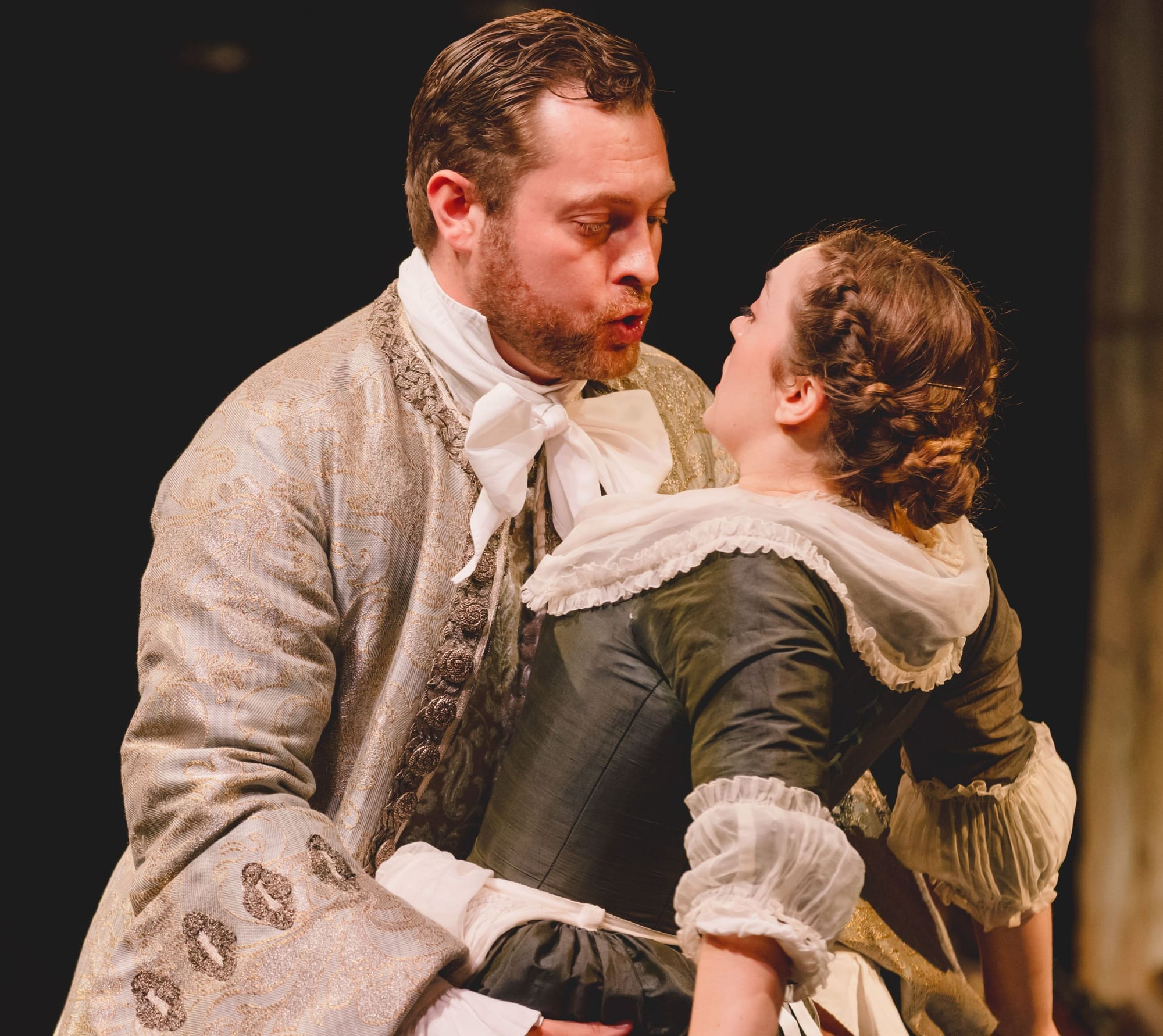
The Marriage of Figaro
Wild Arts Touring Company
July 21 2026
This was a wonderful and memorable experience of Mozart’s beloved opera The Marriage of Figaro. The audience sat mesmerized throughout the three hour performance.
Several factors conspired happily to make this production of a familiar work so distinctive and satisfying. First of all, the many-layered plot of romantic love, lust, confused identities and farcical misunderstandings hung together in brilliantly delineated narrative in a new English translation by Orlando Jopling and director Danielle de Niese; it was engineered at a pace that moved from one twist to another without confusing the audience. The deftly choreographed prop changes facilitated a seamless storyline.
The compact orchestra (placed on one side of the stage) was led from the keyboard by the Artistic Director of Wild Arts, Orlando Jopling. The instrumentalists played with the nuance and finesse of a very accomplished chamber group.
Danielle de Niese, the distinguished Australian born soprano who made her Met debut at nineteen in the role of Barbarina, was attentive to the smallest detail. Each individual performance contributed to a mosaic that was a model of artistic unity. Jack Sandison’s Figaro was droll in demeanour, blending servility with forceful passion. Ellie Neate as Susannah, was consistently spirited, bright-eyed and fresh faced. As Countess Rosina, Eleanor Rolfe Johnson, gave a deeply felt “Dove sono”. Timothy Nelson, bombastic and apoplectic as the philandering Count, and Eleanor O’Driscoll in the role of Barbarina sang with beautiful resonance. Abbie Ward as Cherubino was mischievously agile. Timothy Dawkins as Bartolo/Antonio, William Searle as Don Basilio/ Don Curzio and last, but not least, the elegant Olivia Ray as Marcellina were all excellent.
The programme quotes Dr Joe Spence of the Schools Partnership Alliance, as saying the opera has a "feudal context" and “We revisit The Marriage of Figaro in times of crisis - when we are allowed to do so….In 1786 Mozart offered the Ancien Regime a space in which to rehearse the options for a new, fairer future. He was ignored. Let’s not ignore his messaging today.” The opera is based on a play by the Frenchman Beaumarchais, which was regarded as dangerously revolutionary in its time, and was at first banned even in relatively "Enlightened" Austria, where many reforms had been passed, but the monarchy, nobility and Catholic Church were still very powerful - particularly if you were a musician seeking patronage.
Figaro is a comedy that could be set in many times and places, not just 1786. It takes the side of the honest underling, Figaro, against his overbearing and ungrateful employer, Count Almaviva, a sort of self-indulgent, philandering nobleman who returns as an attractive anti-hero in Mozart's very ambivalent Don Giovanni written the following year.
The red and yellow tent at Ham Court, Bampton, Oxfordshire, and the fantastical, brightly painted backdrop by Matthew Rice (owner of Ham Court and father of Lil Rice who runs Fool’s Delight Circus) both contributed to an enjoyable evening.
Wild Arts is bringing Figaro to the new Schwarzman Centre in Oxford on Saturday August 1.
https://www.schwarzmancentre.ox.ac.uk
The touring season of this production runs until September. A complete list of performances can be found on their website:-
https://wildarts.org.uk/
Pratima Mitchell.