Dont Mention the War...Fawlty Towers at New Theatre, Oxford
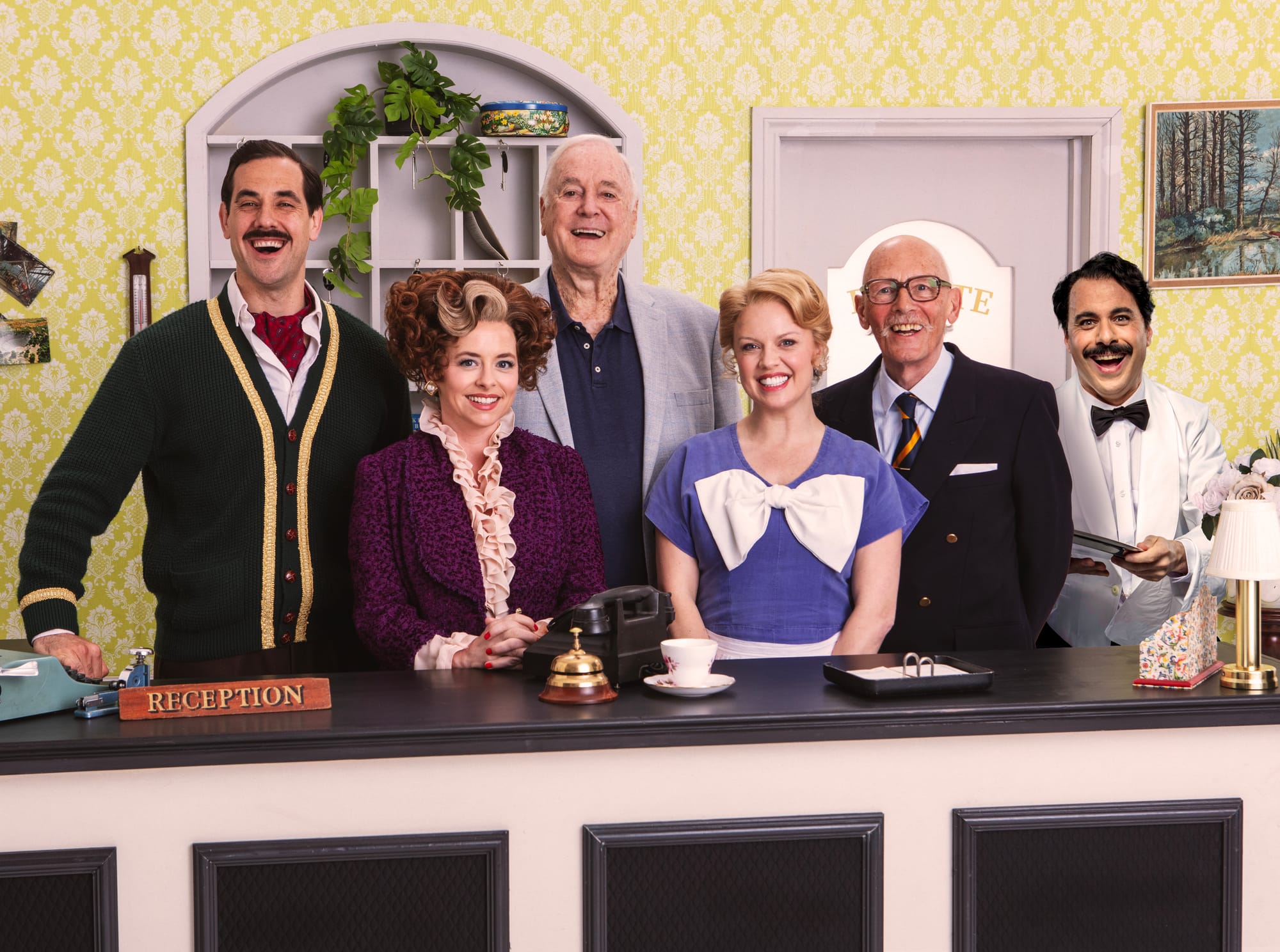
On the evening of 14th July 2026, Oxfordians were getting ready for a nostalgic trip down memory lane even before entering the New Theatre for the stage adaptation of the much-loved TV series, Fawlty Towers. There was anticipation in the air—a quiet buzz at the bar where we enjoyed our preferred tipples and chatted with companions about our memories of the classic sitcom.
John Cleese personally worked on this adaptation and met the challenge of turning a television format into theatre by masterfully weaving three 30-minute episodes—The Hotel Inspectors, Communication Problems, and The Germans—into a full-length, two-act play. He expertly overlaps the subplots so that the consequences of one episode compound the disaster of another, keeping the entire 18-strong ensemble in a state of perpetual motion.
When we took our seats, we saw the entire hotel materialise at once upon the stage, courtesy of Liz Ascroft’s brilliant, multi-level set design! We realised that all the characters were interacting on stage all at once, in contrast to the television screen, where editing controls exactly where we look, the live theatre format offers continuous, simultaneous action. In the background, characters are constantly offering unspoken reactions to whatever chaos is unfolding elsewhere on the set.
For example, while Basil Fawlty—played that evening by a magnificent Adam Elliot, stepping brilliantly into the primary role from his usual character of Mr Walt (played by Ben Jacobson)—was escalating into a state of full, vein-popping mania, my eyes drifted across the stage to Sybil. Wonderfully personified by Mia Austen, who captures Prunella Scales' essence perfectly in our minds' eyes, she sat completely unbothered, calmly filing her nails. This brilliant contrast built the tension beautifully right up until her icy, sharp retorts sliced through his hysteria to deliver the comic punchline.
To achieve this level of frantic energy, director Caroline Jay Ranger relies on spatial timing, precision choreography, and overlapping dialogue. By utilising every inch of the physical space, she tightly winds the structure of cumulative chaos to reach a roaring farcical climax. It is a technical perfection that brought the audience an evening full of helpless laughter.
The bumbling Major (Paul Nicholas) wandered through the madness with pitch-perfect senile confusion, while Polly (Joanne Clifton) and Manuel (Hemi Yeroham) frantically tried to hold the hotel together. This collective familiarity created a wonderfully interactive atmosphere in the auditorium. Throughout the performance, there were spontaneous interjections of much-loved punchlines from the crowd. The audience practically urged the actors on, ecstatically shouting "Don't mention the war!" right along with the cast, turning a classic piece of television into a joyous, shared theatrical event. At the final chaotic climax, the audience erupted, giving the cast a thoroughly deserved standing ovation.
Ultimately, Fawlty Towers - The Play succeeds because it does not try to reinvent a masterpiece; instead, it lovingly breathes new, three-dimensional life into it. By the time the curtain fell on the New Theatre, the collective roar of appreciation proved that John Cleese’s tightly wound comedy still holds an extraordinary power to unite an audience in pure, unadulterated joy. For the local Oxfordians in attendance, it was a masterclass in nostalgia.
Sibel Taylor