Farewell to Gerald Harper 1929-2025
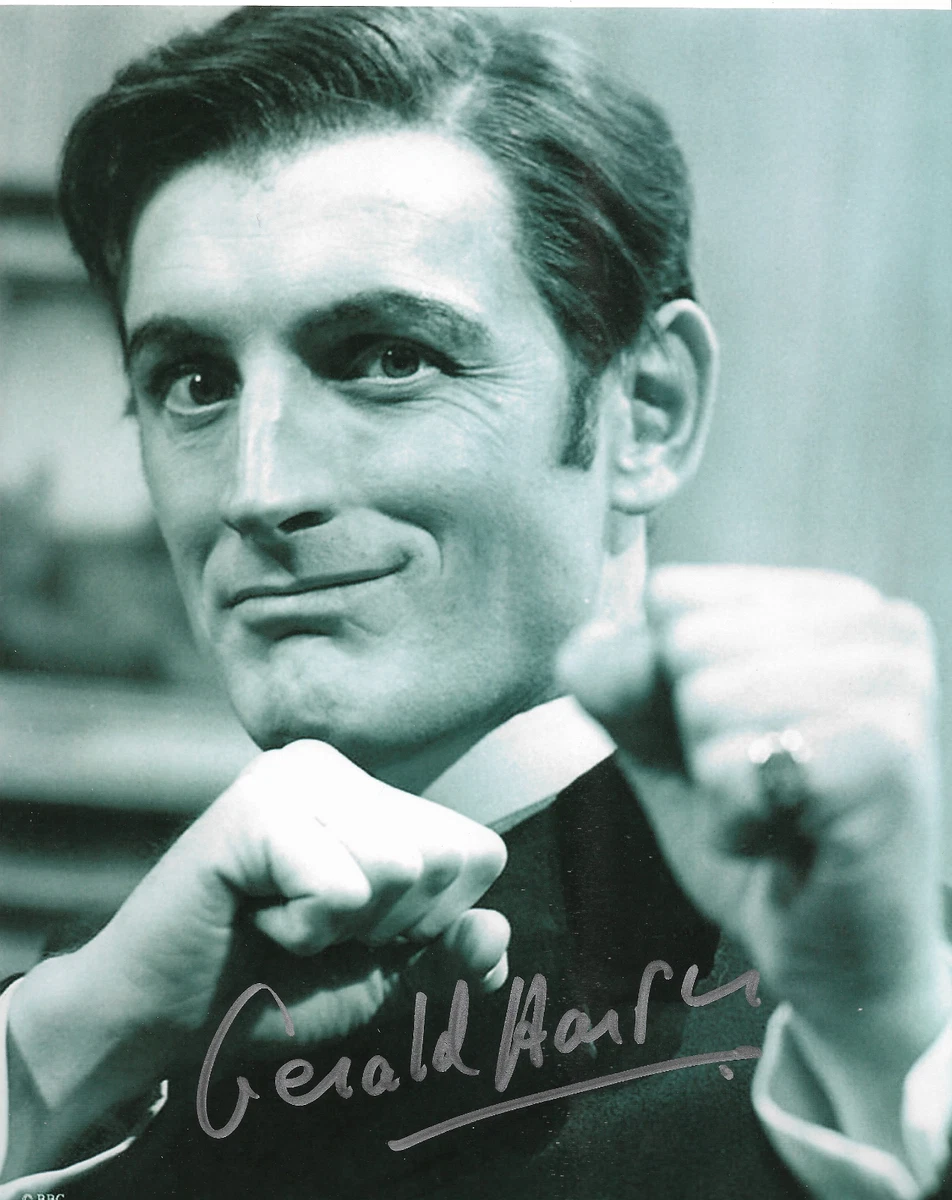
Gerald Harper, the actor whose death in July at the age of 96 got very little press attention, had been retired for many years but is surely recalled with affection and admiration by many.
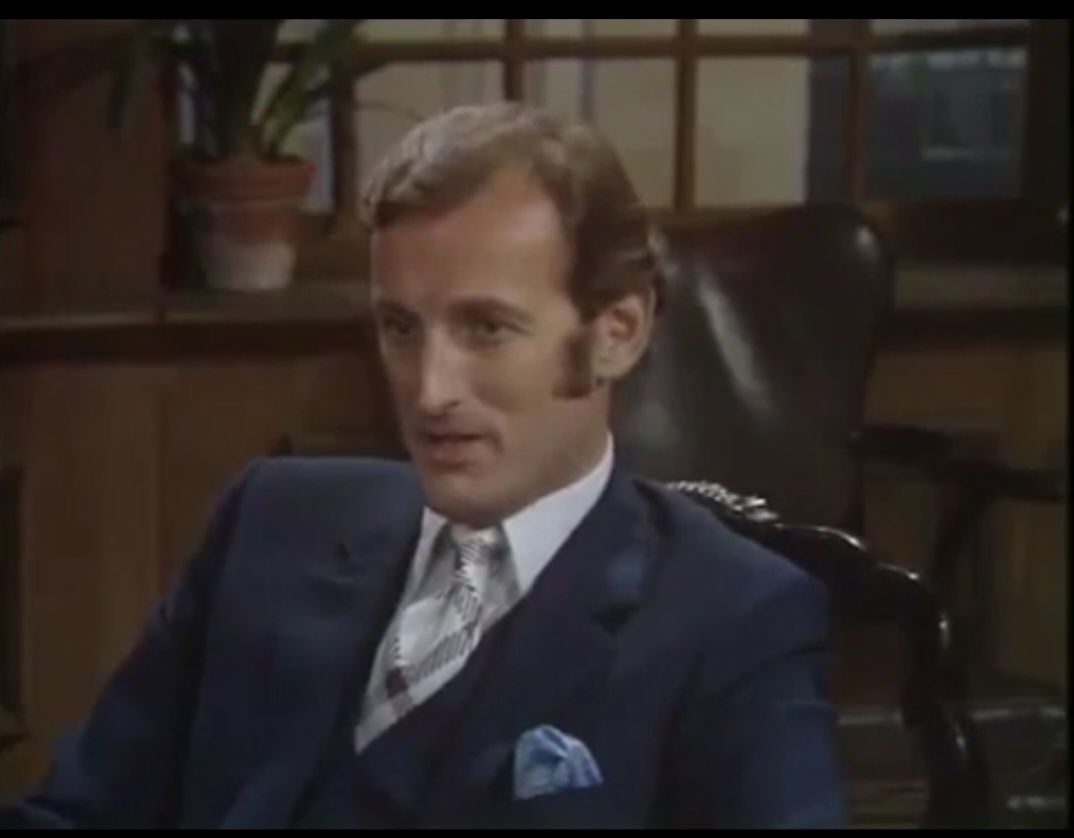
Harper was by far the best Sherlock Holmes ever, and seemed born for the part, which he played at the Haymarket Theatre in 1979. A brilliant actor, almost absurdly handsome, in his starring roles on TV he came to epitomize a certain sort of Britishness. Like it or loathe it, you have to admit that he did it outstandingly well, particularly in Hadleigh, in which he played James Hadleigh, a Yorkshire landowner and businessman with a taste for equestrian sports. The YTV series featuring him ran for eight years in total, and watching it now (which you still can on YouTube or the DVDs that continue to sell) is more than just a nostalgia binge. Originally appearing in the pilot series Gazette, Hadleigh seemed at the start be a rather dislikeable toff, whose interference in the provincial newspaper he happens to own caused resentment and friction. Played by Harper, he developed far beyond this and became so popular that YTV made him the titular hero of the new series.
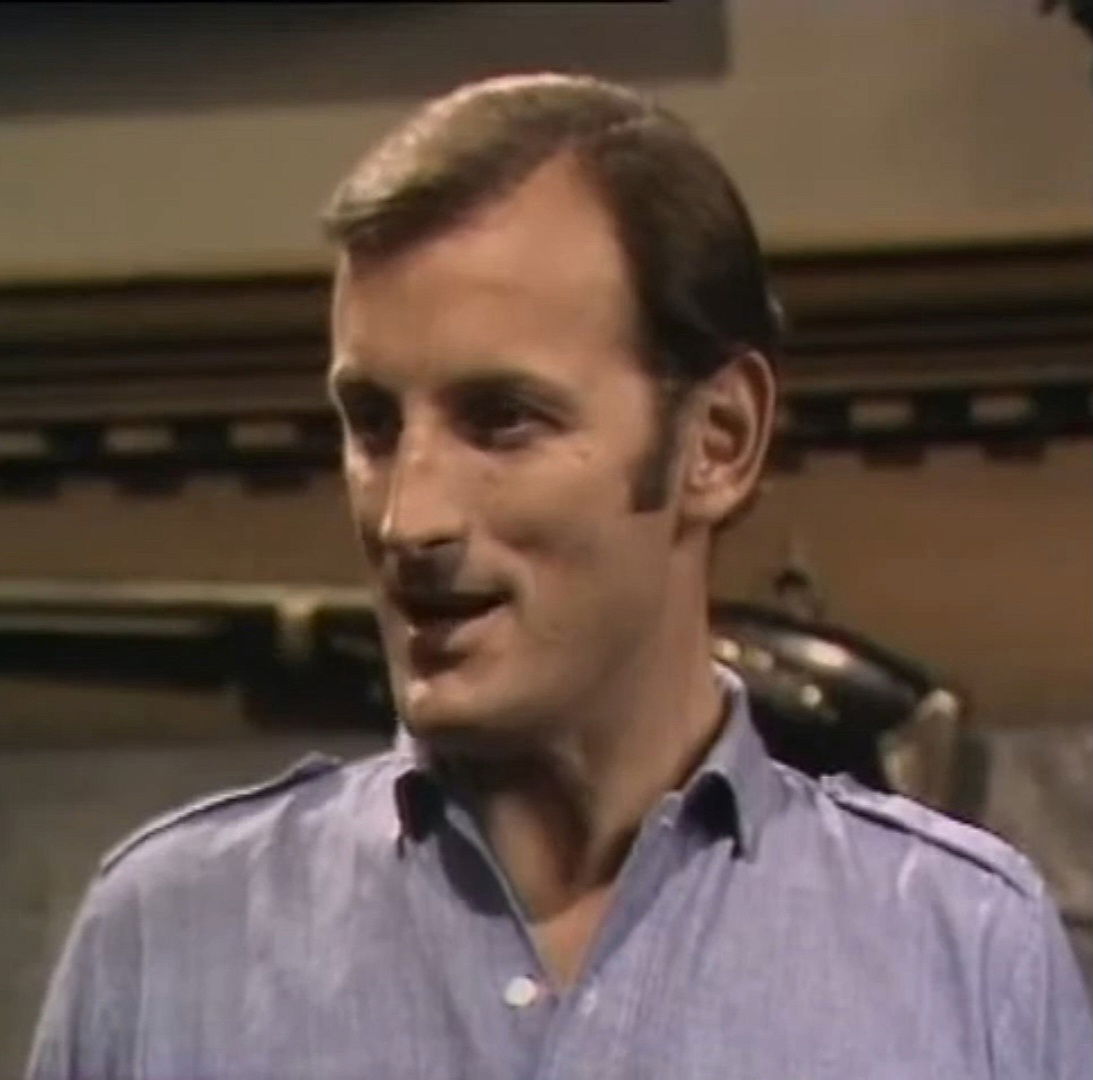
The Telegraph critic Hugo Massingberd once said that Harper should have been cast as James Bond, as he was so good at playing the public school type, but that would have been a waste of a superb actor. Bond stories are trashy, and the films are nothing but a parade of ludicrous gadgets, gimmicks, bungee jumps and compulsive womanising. Harper as Hadleigh brought a powerful presence and complexity to the role. A character who did not seem designed for popularity and was certainly out of fashion (something of a Mr Darcy figure) was made sympathetic. The scripts of Hadleigh were far more intelligent than Bond, well-researched, with insight into many serious issues, and sophisticated comedy. The series created a credible picture of Yorkshire life, indeed of British life in that era. And before the final series was over, Harper truly raised that rôle to tragic-heroic stature.
He was twice voted the most popular actor on British TV for his performance in the role, once in 1969 and again in 1976.
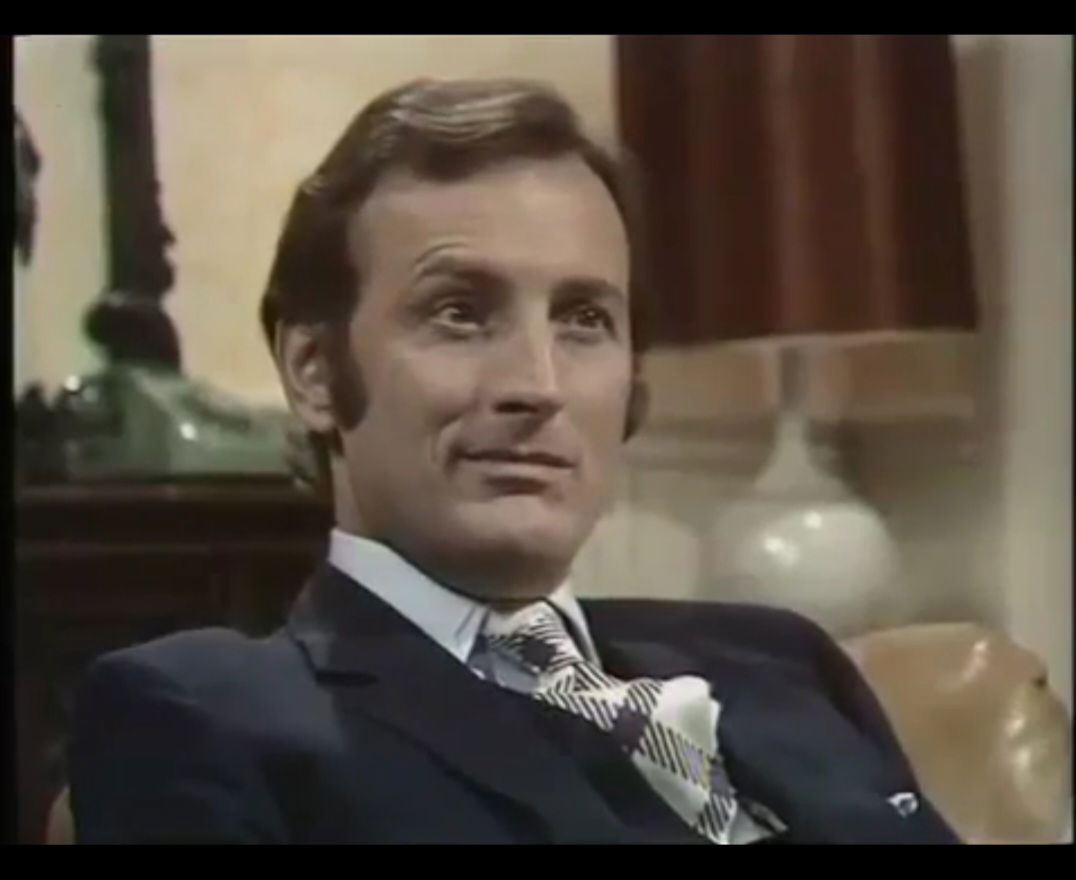
Some critics dismissed Harper as a lightweight heart-throb actor but he was far more, (although if he had ever been cast as Jane Austen's Mr Darcy, it would have run the danger of Elizabeth Bennet accepting him the first time). Yet the truth is he was more than popular, he was a genuinely great actor.
In one scene of Gazette, Hadleigh, standing in a theatre bar, pronounces, "Shaw must be played with panache." Well, nobody could play a line with more panache than Gerald Harper could, particularly when he adopted that gravelly, ironic drawl.
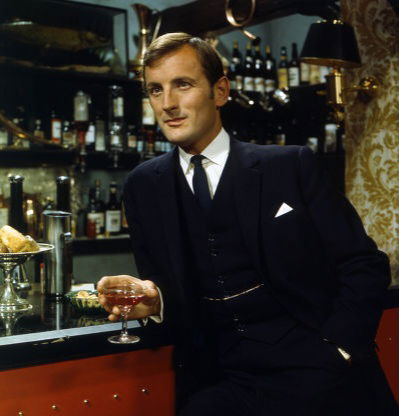
One of the interesting things about Harper's career was the way that he bucked the trend; in an era when actors with a working class image were fashionable - Richard Burton, Michael Caine, Oliver Reed - he specialized in playing the well-bred gentleman, with flashes of humour. Nevertheless, Hadleigh was not always smooth, suave or silky. Like any really good, serious actor, Harper could vary his tone of voice, sometimes making it soft and expressive, at other times icy, even whip-sharp, rasping and quite menacing.
Despite his TV success, Harper never gave up his stage career and appeared as a disturbingly convincing Iago, at the Bristol Old Vic in 1974. In 1984, he performed in a one-man show as Rudyard Kipling - again epitomizing something very British. It was unforgettable. He was an icon of Britishness. Only about twenty years ago, he was still doing a solo show, one man holding an audience spellbound for two hours.
Harper appeared at the Oxford Playhouse more than once, in The Aspern Papers in 1979 and then in 2008 when he played the judge in Agatha Christie's And Then There Were None. On that occasion, he candidly told the local press that he had only ever done television work in order to make himself famous, so that he could get leading roles on the stage, which was his real love. When he said "television work" he surely meant the semi-comic BBC series Adam Adamant, which shot him to fame in 1966. He could never talk of it without visible embarrassment, recalling in another taped interview how silly he had felt and how "petrifying" it was to work on a show with such a rushed production schedule, and no retakes. He had to do unrehearsed stunts himself and there was no stand-in. No wonder he soon left to work for ITV. Nevertheless, the show made his name and to some extent fixed his brand: vintage.
When he appeared on Desert Island Discs, the one luxury he chose was a set of videos of a five-day Test Match. Alas, such things are now disappearing fast in favour of one-day smash-and-run cricket.
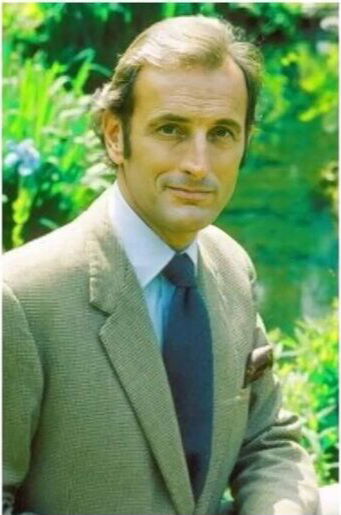
In the 1980s he became the host of a series of radio shows, launching Capital Radio. In this role he was again a traditionalist, (some would say an anachronism). In an era of sexual liberation, he defied fashion to remain a shameless romantic, giving away champagne and flowers to those who had something to celebrate. He even published an anthology of romantic poetry, Gerald Harper in Love, which I am happy to say I own. In the preface he said, "It was H. L. Menchen who wrote, 'To be in love is merely to be in a state of perpetual anaesthesia, to mistake an ordinary young man for a Greek God and an ordinary young woman for a Goddess.' And it was H. L. Menchen who was wrong. I have made no such mistake and were he still here would take pride in introducing him to the Goddess to whom I dedicate this book. She knows who she is." What splendid defiance of the fashions of the time.
There are two things that few people would have guessed about Harper. One is that he directed a Hebrew-language production of Blithe Spirit at the Israeli National Theatre in Tel Aviv. Another is that in his latter years he seems to have converted to Russian Orthodoxy. There were Russian Orthodox priests at his funeral. Clearly there were hidden depths to this man.
https://www.oxfordmail.co.uk/news/2365388.television-adventurer-solving-riddles/
https://www.cdm-ltd.com/cdm/pdfs/geraldharper.pdf
Interview about Adam Adamant here:https://youtu.be/MgPJ6c_E6Rw?si=So6Rsv89hgF_nxA3